

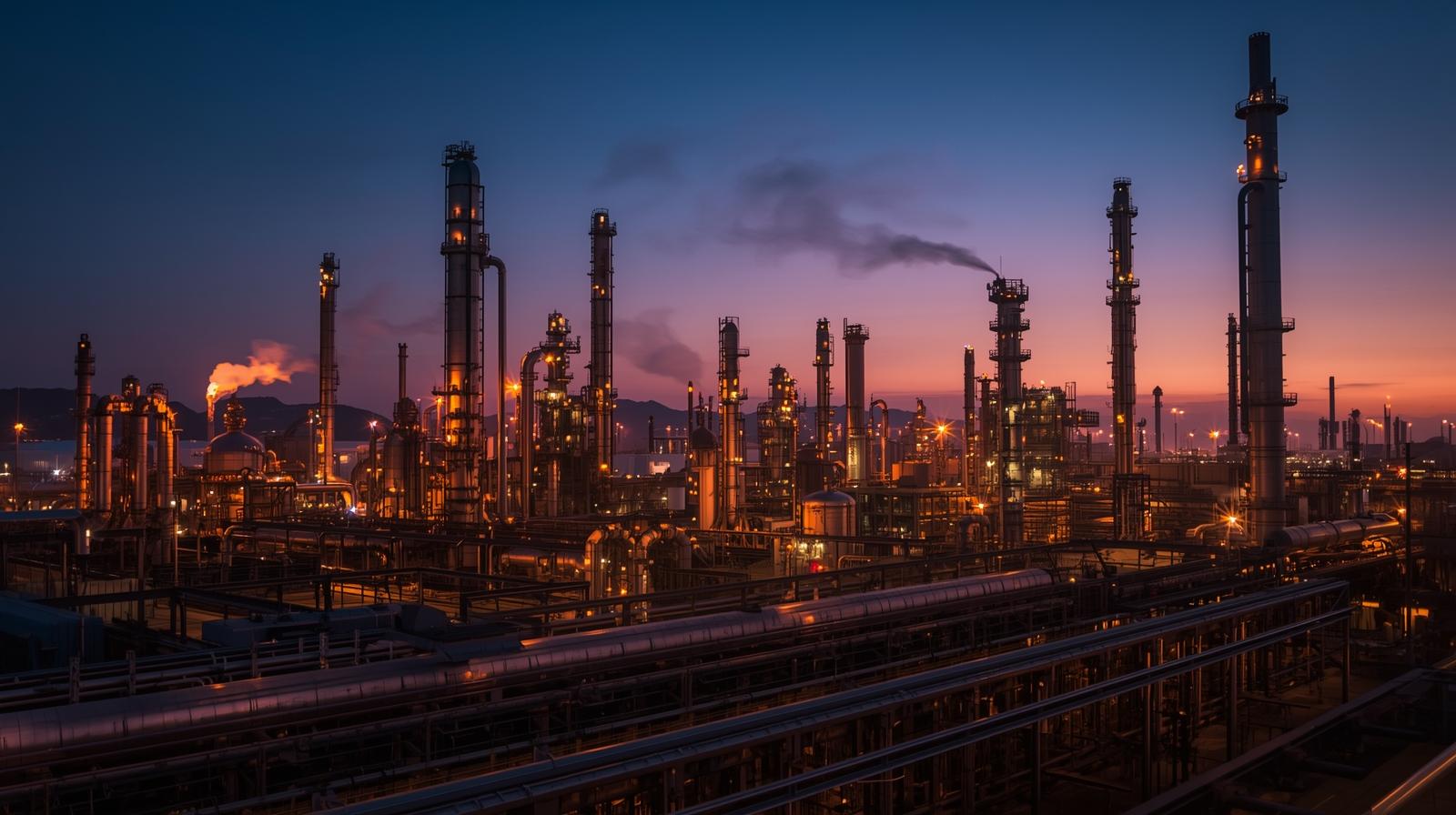
Petrochemicals & Refining
Petrochemical and refinery facilities are among the industries that require the highest level of safety and the highest operational continuity due to high temperatures, pressure, chemical interaction, and the need for uninterrupted production. In these plants, the heart of automation is the correct selection of valves, actuators, pressure control equipment, and a reliable instrumentation infrastructure. Even the smallest deviation in the production line can directly affect quality, efficiency, and safety.
Why Are Compressed Air and Fluid Control Critical?
In refineries and petrochemical plants, process valves, safety systems, pneumatic actuators, measurement equipment, and automation infrastructure often depend on stable pressure and clean/dried air. Factors such as moisture, particles, or oil in the air can cause valve sticking, measurement errors, control deviations, and unexpected downtime.
- Continuity: Reduces failures and lowers the risk of downtime on 24/7 operating lines.
- Safety: Ensures stable operation in safety valves and critical control elements.
- Efficiency: Reduces unnecessary consumption through leak management and proper regulation.
- Quality: Protects production quality by increasing process repeatability.
Key Solutions for Petrochemical & Refinery Applications
Depending on the plant’s needs, the right product selection should be made by considering explosive atmospheres, chemical vapors, high pressure, and harsh conditions. Correct equipment selection makes a significant difference in the following areas:
- Process valve control: Stable flow management with directional control, proportional, and on-off valves
- Pressure regulation: Precise pressure adjustment with regulators and control components
- Air preparation (FRL): Extended equipment life through filtration, drying, and lubrication
- Safety and protection: Reliable operation with safety valves and in critical lines
- Instrumentation: Real-time monitoring and rapid response with pressure switches/sensors
Benefits Provided
- Less downtime: Failures caused by contamination and moisture are reduced.
- Lower maintenance cost: Component life is extended and maintenance intervals improve.
- Safer operation: Provides stable and predictable performance at critical control points.
- More efficient energy use: Air leaks and incorrect pressure usage are minimized.
Conclusion
Success in petrochemical and refinery facilities depends on maintaining safety, continuity, and efficiency at the same time. Proper compressed air preparation, fluid control solutions, and instrumentation infrastructure contribute to more stable process operation, reduced failure risks, and lower total operating costs.